




News
Sentinel-6B entered its exploitation phase on 30 October 2026
After being thoroughly cross-validated with Sentinel-6 Michael Freilich, Sentinel-6B is delivering data with the usual nominal latencies.
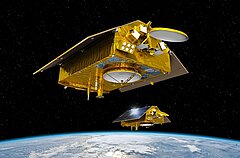
Artist's view of the sentinel-6 program satellites. © CNES/ill./DUCROS David, 2016
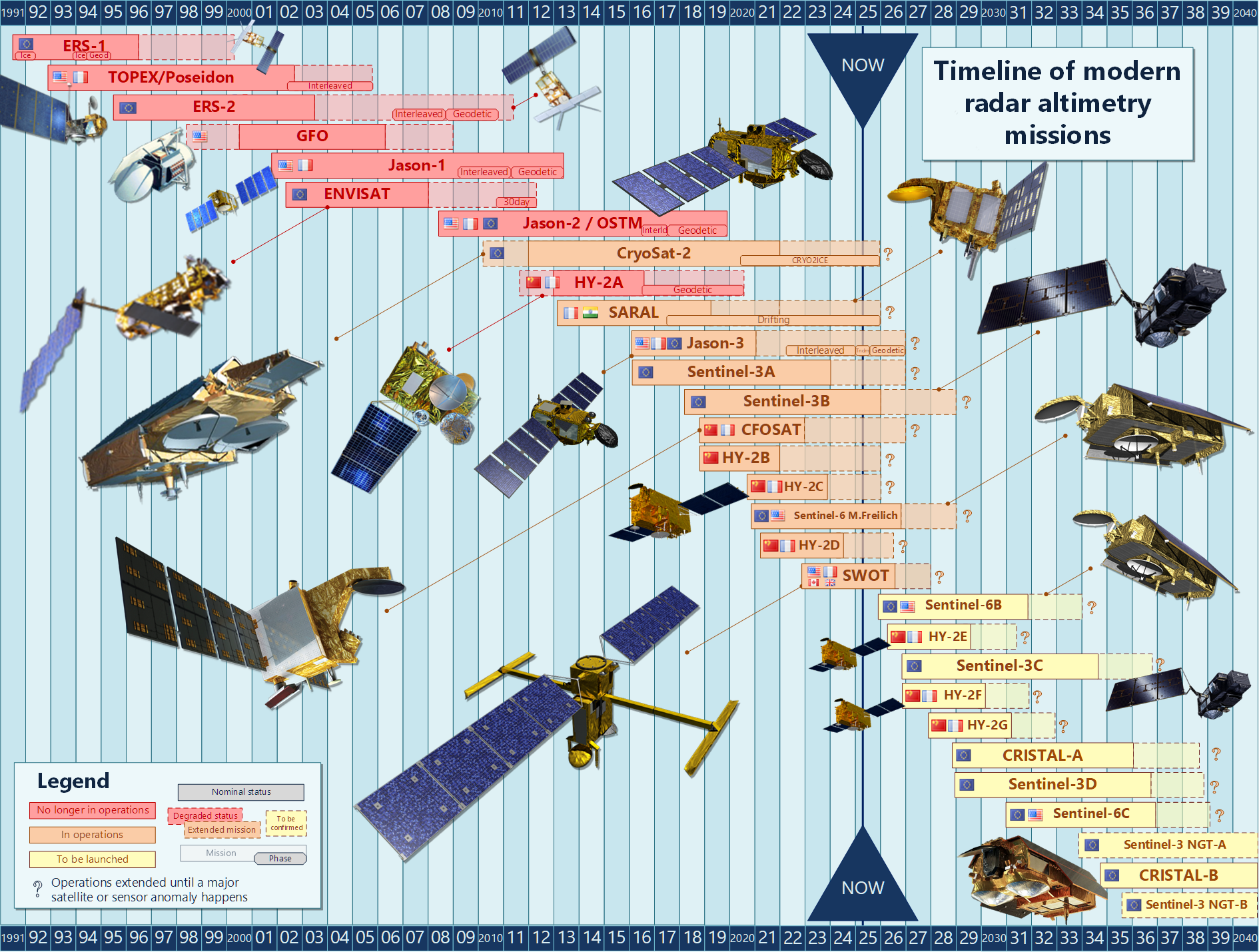
Sentinel-6B, launched on 17 November 2025, entered its exploitation phase on 30 October 2026. Its two redundant radar altimeters have been thoroughly cross validated against its twin, Sentinel-6 Michael Freilich, guaranteeing continuity of the sea surface height record that started with Topex/Poseidon (Nasa/Cnes) in late 1992.
The satellite now delivers data with latencies of approximately 3 hours for near real time, 3 days for short time critical, and 30 days for non time critical products. In the meantime, Sentinel 6 Michael Freilich will be moved in January 2027 to an interleaved orbit that will provide additional measurements between the historic ground tracks for several years.
- Data Access: L1B and L2 data are distributed by EUMETSAT on EUMETCast, the Data Store, and WIS2.0:
- The L1B and L2 datasets are described and also discoverable via the NASA's Earthdata portal.
Further information can be found at the links below:
-NASA's Earthdata: https://science.nasa.gov/mission/sentinel-6b/
-EUMETSAT: https://www.eumetsat.int/sentinel-6b-track-rising-seas-predict-storms-and-aid-forecasts
 Archives